Today is the first Monday in a long time that I didn't wake up with work to do in my book. Well, writing work, at least. After years of working on the manuscript of my spiritual memoir, Beyond Sunday: God's Patient Pursuit of My Soul, it is finally in the hands of my copy editor. Well, it will arrive there tomorrow.
Birthing a book involves much waiting and as many phases and checkpoints as birthing a baby. A book's cells are its words. Unlike a human baby, a book does not multiply, divide and organize its cells as it grows. The author must do this consciously, with ever-evolving decisions. The author's mind becomes the placenta that forms around the embryo or book. The writer's mind, through which all nutrition for the developing book will pass, allows ideas, feelings, and images to exchange as words, characters, scenes, and chapters. Some grow as it develops, others get deleted as waste.
During the embryo's second week, a group of cells separates to develop into the amnion, the membrane that will surround the fetus to form the embryonic sac. This fluid-filled sac helps to cushion the fetus during later development. A writer must create his or her cushion of protection and isolation during the book's development. It is not automatic. This cushion is a challenge because of the book's invisibility at this stage and for many stages to come. A writer receives nutrients during ordinary moments in life. The words multiply on the page only when the writer makes a meal of those nutrients with paper and pen, laptop, or other electronic devices.
To be continued...
Monday, May 9, 2016
Tuesday, April 26, 2016
Inspiration and a Future of Hope and Light for All.
On this date, we remember Bishop Juan Gerardi.
The Recovery of Historical Memory. That's the name of the project Bishop Juan Gerardi, auxiliary bishop of Guatemala City, created to investigate the military's human rights abuses that caused the destruction of over 400 Indian villages.
When I lived in River Forest, Illinois in the 1980's, our parish played a small part in the sanctuary movement, providing support, shelter and transportation to a Guatemalan family escaping the horrific military violence in their country. My Spanish was not that good, but I will always remember their eyes.
By 1996, the United Nations brokered an end to thirty-six years of civil war in Guatemala. The peace agreement called for an investigation of human rights abuses. Bishop Juan Gerardi, auxiliary bishop of Guatemala City, headed the archdiocesan office of human rights. His Recovery of Historical Memory (REMHI) project conducted an exhaustive investigation.
Two years later, he presented the findings in a 1,400-page work, Guatemala: Never Again! It outlined four decades of assassination, torture, and massacres, including the death of hundreds of lay catechists. (I've been a catechist a third of my life.) The conclusion of his report pointed to the Guatemalan military being responsible for almost 90 percent of 200,000 noncombatant deaths and disappearances.
"We are collecting the people's memories," Bishop Gerardi reported, "because we want to contribute to the construction of a different country. This path was and continues to be full of risks, but the construction of the Kingdom of God entails risks, and only those who have the strength to confront these risks can be its builders."
Two days later, on April 26, 1998, military assassins ambushed Bishop Gerardi in his home. They smashed in his skull with a slab of cement.
The older I get, the more relevant history becomes to me. The United States of America could use a similar project (there probably already is one) to recover our memories of our own human rights abuses toward Native Americans and those we now call African Americans who had no interest in leaving their native country, homesteads, family, or friends when they were captured, kidnapped, sold, or exiled in our land almost four hundred years ago.
May I have the strength of good Bishop Juan to speak Truth to injustices, intolerances, racial jokes and atrocities. Opportunities, unfortunately, are plentiful.
"Years of terror and death have reduced the majority (of Guatemalans)
to fear and silence. Truth is the primary word that makes it possible
for us to break this cycle of death and violence
and to open ourselves to a future of hope and light for all."
Bishop Juan Gerardi
source: Give Us This Day, Daily Prayer for Today's Catholic, April 2016
#kidnapped #juangerardi #RecoveryOfHistoricalMemory #chrismanion #assasin #Guatemala
Thursday, April 7, 2016
Lesson from a Pruned Bush
From my Retirement Collection of Poems
Pruned Bush
by Chris Manion
Sometimes, every now and then,
it's helpful to stop,
cut way back on
activities
words
processed foods
visual input
and simply rest.
The severely pruned bush reminded me of this.
It had been so full and well, bushy.
Now it was angular, mutated,
kind of ugly if truth be told.
It had been allowed to reach out into sidewalk space,
overgrowing its boundaries,
pressing passers-by to the outer edge of the pavement.
We walk around overgrown objects, thoughts, attitudes
for years
sometimes decades
barely aware we allow them to edge us out
of our true self
of a happy life.
Friday, February 19, 2016
I Chose Joy: A Reflection on Biking and a Good Ride
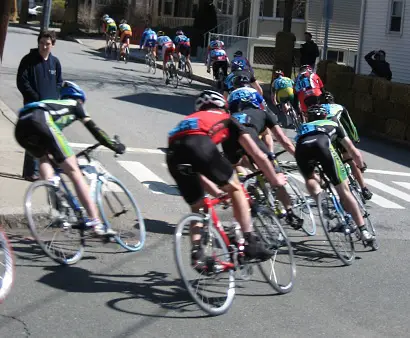
I saw bikers this morning, probably twenty of them riding in close formation down Sandestin Boulevard. I was heading south to Mass when they rolled out of the turn-about heading north. The flash of their colorful jerseys, helmets, and pedaling legs caused my heart to race.
As emotions clutched my gut and closed my throat, I lifted my hand off the steering wheel in greeting. The lead biker in the peloton waved back as they rode past.
My father loved to bike. He did so several times a week, both in Pittsburgh, Pennsylvania and in Phoenix where he moved in retirement. He earned a gold medal in the El Tour de Phoenix Senior Olympics race in April 1998. His jersey, hat, riding gloves and medal from that race hang on my office wall. A year later, he was diagnosed with lung cancer and given six-to-nine months to live.
Moving the sad emotion out of the way, I reclaimed the joy of knowing that he and mom are enjoying eternal life with Our Lord, Jesus. Both visited me in unique ways shortly after their deaths, bringing great peace and joy as their final gift to me. The depth of their happiness was immediately apparent but unimaginable, exceeding anything our human bodies can experience.
I chose to match my emotions to the faith strong and sure within me. Acting on that faith, I denied the shadow of sorrow that tried to darken the joy my heart knows about the communion of saints, the forgiveness of sins and life everlasting. I will continue to choose joy instead of sadness, and life over death, just as my father did. He lived ten years after his diagnosis.
He knew how to have a good ride.
Wednesday, February 3, 2016
Second Wind
Runners talk about gaining a second wind somewhere during their run. I'll probably never experience this. I have no desire to run. A heel spur and Achilles tendonitis give me all the excuses I need if I ever decide to change my mind.
I don't know how many times I've edited my spiritual memoir. It doesn't matter really. I never count things that really matter but pursue, persist, and persevere until I accomplish what needs to be done to achieve excellence, to heal, to grow. It's been a slow process. Being a burgeoning writer, I'm pretty sure it's always going to be a slow process. Creative juices have their own ebb and flow to their tide. Each writer observes and walks his or her own beach to learn and breathe its salty air.
Something happened last week that surprised me. I printed out a copy of my manuscript to send to a beta reader. As it sat on my desk to be mailed, I started to page through it to see how the latest version looked on the page. Before I knew it, I was in another line edit. I'd already sent the MS to my developmental editor. I thought I was done for the moment until I got her feedback. Wrong.
Clarity blew in like a storm out of nowhere. I read through page after page in high adrenaline mode, marking corrections, finding new ways to clean up sentences, avoiding duplicate descriptions as if my life depended on it. If I knew what an upper felt like, I might have been experiencing something like its effects.
Maybe the work was so clean finally, the edits came more easily. Maybe this is what it feels like to be close to a finish line in a race. Who knows? The thrill of this line edit is a new exhilaration for me on my writer's beach and I'm staying with it '
til the sun sets.
Tuesday, December 1, 2015
Blog Guru Wanted.
"Don't let the noise of others' opinions drown out your own inner voice." -Steve Jobs-
My inner voice is telling me I need a wise and wonderful helper to make my blog a place of beauty that attracts me to it like a flower draws a bee. A soulful resting place beneath a tree whose roots drink deeply from the river by its side. Where birds chirp in the morning. Where fear has no friends. A verdant place to pick a blade of grass, place it between your thumbs, and blow a fresh sound into space.
I have two blogs I'd like to meld into one. I want to easily post photos and text. I believe the universe responds to our requests, so I'm putting this one out there. If you can help or know someone who can, please contact me. Let's make a beautiful space together and do some good and Godly work.
chris.manion@gmail.com
Thursday, November 5, 2015
I'm not afraid to write my way out of the dark.
It's true. It was all dark and roots poked at me everywhere and I couldn't move, at least I didn't think I could, and then one day something started pushing out of me. It was a strange feeling but it had a purpose and an energy that sought release, sought the light, and here I am to tell of it in glorious sunshine reaching taller, taller, every day as though I were still a child growing in bed at night.
I'm not afraid of the dark. I was born in it. So is my writing. It seeks the light. All souls do.
Let your writing out and I'll do the same for mine. It knows how to break through the surface. Trust it as it works its way upward until it shows its first leaves. These leaf pages will fall away eventually like childhood beliefs. Others will grow, stronger, better, fuller.
I commit to living with more joy, more vulnerability, more courage to Be My Self, aware of the darkness and little deaths I see each day in the world, in my community, in my self. Christ's light within me, God's light that cannot hold itself back - Turn your back, Moses, while I pass by. I know the intensity of my Light and Love. I don't want to hurt you - is my light. It would not shine so brightly if the darkness were not so prevalent. Don't we all need another person to show us courage, love, boldness, beauty, compassion, forgiveness? We feel it. We see it - shine your light - and like a doctor's tap on our knee, our heart moves outward reflexively. I will be that one person for someone. I will be that one today
and the next
and the next.
Writers are growing trees. Hug a writer today.
Monday, July 27, 2015
Unfamiliar Nervousness Hangs Out to Dry
When she was in her early twenties, my daughter asked me once how do you know whether to allow yourself to be vulnerable to another person. What hung in the air was a plea for protection from the risk of being hurt. It's the tipping point in a relationship. In order to love fully, you must cross that line and not look back. The risk of being hurt hangs at the precipice as we decide whether to step out into faith toward another or not. Some people never make it across.
In the parable of the sower (Mathew 13: 18-23), Jesus instructs how the seed sown among thorns is the one who hears the word, but then worldly anxiety...chokes the word and it bears no fruit. For several decades, I encouraged beautiful women on my sales team to let go of anxiety about the outcome of their work, and simply apply themselves to the work, doing the best they could at serving others. Releasing concern about the outcome allowed a natural flow of their abilities to occur and positive results followed.
In my new writing career path, I am experiencing the same sort of anxiety about which I counseled many just a few years ago. It is an unfamiliar nervousness and hesitation. I'm accustomed to being assertive and bold in my pursuit of my goals. The core toggle point is the feeling of vulnerability about which my daughter queried me. A memoir by its very nature is deeply personal. As I get closer to releasing it, this very private side of my faith life is about to walk naked among my readers. I am self-conscious and doubtful of acceptance. Like the Emperor who had no clothes, an authentic memoirist has none either. The difference is he or she knows it.
If I take the same counsel I used to give, I will shake out my feelings of inadequacy like a sheet fresh from the wash and hang it in the wind to dry and billow freely. Without doing anything at all, a sheet hanging on a line in the wind restores peace to agitated souls, tired and weary, who gaze upon it. My goal of serving others by sharing what our Good Lord has done in, with and through me will be accomplished by simply hanging myself out to dry in Spirit wind, in my book's pages, after being washed in the blood of Christ, and rinsed in His Downey soft gift of peace.
I'm all wet, Lord. You have drenched me through the night. Hang me up. I'm ready for a new day of line drying, to smell fresh from the breeze of your Spirit, so that others may fall asleep on my sheets in your sweet, fragrant peace.
"Live in a manner worthy of the call you have received, with all humility and gentleness, with patience, bearing with one another through love..." St. Paul to the ephesians 4:1-2
Sunday, July 5, 2015
Forming Habits Myth #4: Rewards Alone will Help You Stick to a Habit
I don't think I focus on rewards enough. Or I reward myself too early. I tried M&M's once. My rule was to take one with a particular action as I sat at my desk. Well, let's just say that didn't work...
Here's the scoop from Thorin Klosowski's blog on this topic.
If you look at just about any advice for forming a habit (or breaking one), you’ll see suggestions that you should reward yourself as you go so you stick to it. This is a great idea, but it’s not the whole story.
In his book, The Power of Habit, Charles Duhigg sums up the problem with relying just on rewards:
Countless studies have shown that a cue and a reward, on their own, aren’t enough for a new habit to last. Only when your brain starts expecting the reward—craving the endorphins or sense of accomplishment-—will it become automatic to lace up your jogging shoes each morning. The cue, in addition to triggering a routine, must also trigger a craving for the reward to come.
Duhigg’s saying that you can’t rely on rewards to get that habit to stick. It’s a whole system, which he calls the habit loop. It looks like this:

So, if you want to get rid of a bad habit, you need to identify the cue and come up with an alternative reward. For example, let’s say you want to stop eating a cookie everyday at lunch. First, you need to identify the cue. Is it hunger? Boredom? Low blood sugar? Take some time to think about what launches that initial craving.
To figure out what the craving is, Duhigg suggests you start experimenting with rewards. This can help you figure out how that craving works and replace it with something else. So, when you’re craving that cookie, adjust your reward. Instead of getting a cookie, go outside and take a break. Or buy an apple. Maybe try getting a coffee instead. When you choose to do something that isn’t eating a cookie, you’ll eventually figure out what you’re craving so you can replace the cookie with something useful. For example, maybe that cookie was just a convenient excuse to get up from your desk and wander around for a bit.
Once you isolate that craving and reward, you can even start working out the habitual cues so you can really solidify the habit. Experiments suggest these cues fall into five categories: location, time, emotional state, other people, and immediately preceding action. When you’re trying to figure out what the cue is, make a note of these five things when you’re craving that cookie. Take a few days to collect all this data. Once you do, you’ll probably know exactly what’s triggering that cookie craving. Now, with all that data, you can start replacing that bad habit with something good.
The point is that cues are just as important as reward, so don’t concentrate solely on the reward. Find that cue and find a way to work with it as well. The same goes for forming good habits too. Want to exercise more? Duhigg suggests choosing a cue like going to exercise in the morning, then rewarding yourself with a smoothie afterward. The cue can even be as simple as leaving your running shoes by the door if you’re trying to get into running.
Do you have a reward that works for you? Please share, fellow writers and friends!
Saturday, July 4, 2015
Habit Myth #3: All Strategies Work for Everyone
I learned in my direct sales career that everybody didn't like the same rewards or recognition that I liked. The same holds true for forming habits. The same for motivation. I'm a questioner (see below). What attitude do you hold when it comes to motivation?
We continue with Thorin Klosowski's thoughts on the myth that strategies and motivations to form a habit are one size fits all.
Everyone has their own “perfect” method that helped them form their habit. Maybe they created a routine in a spreadsheet. Perhaps they followed the advice of countless famous people. But like most things in life, there’s no magic tip that works for everyone.
If you look through the archives at Lifehacker, you’ll find countless tips for helping form a habit, complete with examples and anecdotal evidence about how well these techniques work. But strategies aren’t universal. What works for you might not work for me. For one, our lifestyles are all a little different, so why I have (or want) a habit is completely different from yours. Motivation is different too. In her book Better Than Before: Mastering the Habits of Our Everyday Lives, author Gretchen Rubin suggests most of us fall into one of four different general categories with regards to motivation:
- Upholders respond readily to both outer expectations and inner expectations.
- Questioners question all expectations, and will meet an expectation only if they believe it’s justified.
- Obligers respond readily to outer expectations but struggle to meet inner expectations.
- Rebels resist all expectations, outer and inner alike.
Knowing which group you fall into can help you work through your own tendencies to find the best way to tackle a habit. If you’re not sure which you fall into, Rubin has a quiz that can help point you in the right direction. Once you complete the quiz, she deals out a little advice for your motivation type. For example, after taking the quiz, I was labeled a “questioner,” which doles out this advice:
Once Questioners believe that a particular habit is worthwhile, they’ll stick to it—but only if they’re satisfied about the habit’s soundness and usefulness. They resist anything arbitrary or ineffective; they accept direction only from people they respect.
That doesn’t sound super helpful on the surface, but it’s helpful when thinking about habit formation. If I’m going to take something on, I need to think it’s valid and useful, so you probably won’t see me going on regular juice fasts anytime soon. I also don’t tend to need much in the way of external accountability. If I want to go on bike rides four days a week, I just go. I don’t need a riding buddy to go with. However, if I was an “obliger,” external accountability, like a workout buddy, would probably be really useful in forming that habit.
Regardless of how you feel about Rubin’s particular metric, the takeaway is really the same. We’re all a little different and what motivates us to start new habits and ditch old ones matters when you’re trying to figure out an approach that works for you.
Want to read more now? All four myths are found at Thorin's blog here.
Friday, July 3, 2015
Myth: You Can’t Miss a Day When Forming (or Breaking) a Habit
It's important not to beat yourself up when you miss a routine. With all that most of us have on our plates, it's nearly impossible to create a habit that you adhere to strictly. I figured out - once I became a mom - that getting it done whenever I could and doing the best I could on any given day worked pretty well. I need to remind myself of that occasionally. It is never an excuse to stop creating the habit worth doing.
Here's what Thorin Klosowskii posted on this myth.
The “Don’t Break the Chain” productivity method (widely attributed to Jerry Seinfeld) is wildly popular and the concept is pretty simple: spend some amount of time every day doing an activity, then cross off the day on the calendar when you do it. If you don’t do that task, you miss crossing out your calendar and the chain is broken. Of course, Seinfeld isn’t the only person to come up with this concept. It’s a persistent myth that in order to form a habit, you need to do it every day (or at least on a schedule) without ever missing a day.
The good news comes from the same study, published in European Journal of Social Psychology, that debunked the 21 days myth. It turns out that missing a day occasionally didn’t affect the habit formation process. Repetition of behavior
is important, but you don’t need to beat yourself up just for missing a day occasionally. That doesn’t mean this method isn’t useful, though. Tracking progress is good, just don’t let missing a day destroy your self-esteem.Want to read more now? All four myths are found at Thorin's blog here.
Thursday, July 2, 2015
Myths About Habits, Debunked
I
struggle with forming habits just like everyone else. I rely on them and spend time creating and
reinforcing them so I can go on auto pilot on low days and still take care of
my body, relationships, and work I'd like to do. Getting in the habit of writing every day is a tough one. It's still forming for me. And it's worth the effort to create it. What habit are you working on?
Thorin
Klosowski offered up some thought-provoking myths on habit on his blog Lifehacker. Four of them, as a
matter of fact. I like to take things in small bites, so here's the first. Tell me if you feel
relieved. I did.
"Myth: It
Takes 21 Days to Form a Habit
You’ve probably heard it
takes 21 days to form a habit (or possibly 28 or 30), but according to most
studies, that simply isn’t the case. But it helps to know where that myth comes
from. It seems like the initial “21 days” idea originated in Maxwell Maltz’s
book, Psycho Cybernetics:
It usually requires a minimum of about 21 days to effect any
perceptible change in a mental image. Following plastic surgery it takes about
21 days for the average patient to get used to his new face. When an arm or leg
is amputated the “phantom limb” persists for about 21 days. People must live in
a new house for about three weeks before it begins to “seem like home”. These,
and many other commonly observed phenomena tend to show that it requires a
minimum of about 21 days for an old mental image to dissolve and a new one to
jell.
Perhaps unsurprisingly,
the time it takes to adjust to the loss of a limb doesn’t correlate to forming
a habit at all. Still, self-help gurus latched onto the 21 days idea and spread
the myth everywhere they could.
So, researchers from the
University College of London decided to take a closer look. In their
study, they found that habits take a lot longer to form. They’re
also dependent on the person and the habit. On average, it took people 66 days
to form a habit, but it varies for everyone (the variability was big, too,
ranging from just 18 days to 254 days). Their study was small at just 96
participants, but it still shows that the amount of days it takes to form a
habit is variable.
Which is all to say,
there’s no magic number and no magic bullet. It’ll take time and effort to form
a habit, so don’t expect to automatically start doing something in just 21
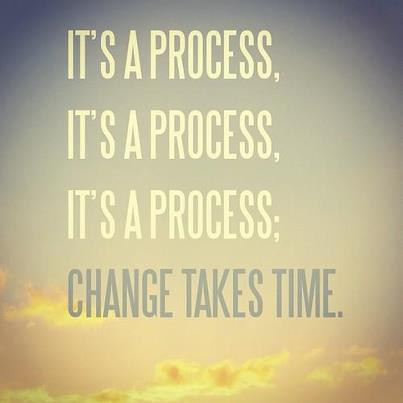
days. Habit forming is a process, not an event on your calendar, so don’t treat
it like one.
Next myth tomorrow. Want to read more now? All four myths are found at Thorin's blog here.
Friday, June 5, 2015
One Man's Butt is Another's Burr
The license plate on the truck read Alabama. It could have been any state really. We were stopped at a light on Highway 98. It was a
beautiful day. Summer puff clouds were building,
as they do, into mountainous mounds. The sea
air blew gently through open car windows. An American flag saluted palm trees as sea gulls flew overhead. Then it happened.
A cigarette butt flew out the window of the truck ahead of me. It hit the ground still smoking. There were no cars in that lane yet. The light was still red. With oil spills, tender ecosystems, and the ongoing discussion about our squeaky clean sand, it felt wrong to let that cigarette butt lay there.
It was ridiculous, I know, to be worried about a cigarette butt in a land of millions of disposable water bottles and plastic throw-away meal containers. The devil is in the details, no? We've got to start somewhere. I tried to calculate if I had enough time to get out of my car, walk to the burning butt, pick it up after squishing it, get back to my car and buckle myself back in before the light changed. I imagined the looks I wouldn't acknowledge from the truck's passengers.
A car rolled over the cigarette and stopped alongside the truck. I
could still retrieve the butt. I glanced at the light. Was there time? Another car slowed to a stop. The
butt was now crushed and flattened. It would wash into sewers or be blown into someone's piña collada.
It was too late now. I had to let it go. I wondered why we don't have signs warning of $500 fines for littering as I've seen on roads in my travels. I imagined how we wouldn't need such signs if everyone would stop and pick up one piece of paper or discarded can. How tourists would comment that locals pride themselves on the cleanliness of their town.
"We have grown accustomed to thinking of ourselves
as separate from creation," says author and theologian Megan McKenna in Harm
Not The Earth. "From a biblical,
but also from an ecological, point of view this position cannot be
sustained. We do not simply live on the
earth, but from it and within it."
When we 'dis' our
planet by discarding toxins into its waters, cutting too many trees,
littering, ignoring recycling, allowing oil wells to leak undersea for years
without repair, or any of the million ways we do so, we and the earth suffer.
"If we take care of the earth, we ourselves are taken care of,"
advises McKenna.
I see you who gather trash unceremoniously during your beach walks, looking for no attention, a cleaner beach their happy
reward. Thank you.
The statistics for animals and plant life are
appalling. It is estimated that 60% of the ecosystems that support life on earth... are quickly being degraded
and depleted.* They are not expected to last until 2050.
Thirty species are lost every day in the world. That means more than ten thousand each year!
In this century alone, more than half of all the known species will be gone.
As I go about my days now, I look for one piece of trash
I can remove. It's not much, but it makes a difference, if not to the
tourists, at least to the beautiful people who live here. Everyone knows
we have a lot to protect. It's not just the sand we like squeaky clean.
* from "To Serve and Preserve," an article by
Ched Myers, quoting David Helton, originally published in Sojourners, March
2004.
Thursday, May 28, 2015
Some things never change. The struggle informs.
5-28-15
Paying attention to the struggle, writing about it, sitting with it without trying to "fix" it right away, these are my processes of late. They are gentle to my spirit and reveal truth the way I learned it as a child.
Something's not working about cleaning up my office. Old energies are stuck here, I think to myself. Old habits, too, of too much work to complete in a day, so I might as well leave it on top to begin working on it in the morning, repeated too many times until a nice big pile looms like a mountain I don't have the energy to climb. Or so I tell myself. And too many decisions to make. I like Kondo's sink-cost: the mental and physical toll of keeping unused items is greater than throwing them out. The "pile" sitting there keeps me from going through it. I get only the top three or so items done before... what IS it that keeps me from emptying the pile or giving it a new home?
Stories I tell myself. Self-limiting beliefs that need cleaning out like my winter clothes from the closet. Gotta donate some of those. They don't bring me joy anymore and I'm trying the Kondo status quo: all will be thrown out unless I can think of a good reason to keep it. No music when decluttering, Marie Konda says. I think my new rule will be no computer on when I'm cleaning off the desk. No email or internet to distract me.
It's a start. We'll see if the desk looks better tomorrow.
The Life-Changing Magic of Tidying Up by Marie Kondo. Click the following link for article in The Atlantic about the phenomenon of this book.
http://tinyurl.com/ospyt8b
Tuesday, July 22, 2014
Tilted.
Reflections from the seashore, as true today as when I wrote it five years ago...
6-12-09
In our early morning walk along Sandestin’s beach this
morning, I found myself most of the time on a slant. Life’s like that, no? It either pushes us a little off kilter, or
we look at it from a skewed, slightly tilted, self-centered perspective.
We’re just 12 days into hurricane season this year and all
has been quiet. Gentle waves. No serious storms. Still, the wave action over the past weeks
has pushed and pulled the sand in such a way that occasional drop-offs and
slanting wet sand at the water’s edge make for a tippy walk.
On a lovely stretch
of the beach, the sand leveled out. The
sound of the waves was softer here because they rolled gently, with no sudden
dropoffs to crash them more violently to the shore. I wasn’t on a slant anymore and so I stopped
and enjoyed the moment. The shallow
flatness that stretched before me beckoned me in to the warm Gulf waters. I drank it the moment and repeated the mantra
my husband and I say daily. It just doesn’t get much better than this.
As I stood gazing out on the emerald/aqua blue waters
looking for dolphins, turtles and such, the waves lapped gently against my
legs, splashing up to my knees. Each
time the tide receded, it took a little sand away from around my feet. My feet were slowly sinking in a little hole
the waves were creating. I stepped out
of the hole and moved along on my walk.
The heat of summertime often calls to us to stop and enjoy
the view as well we should. It’s a
beautiful season that makes most of us smile just at the mention of it. As the children come in and out of the door
this summer, as tables are set and cleared, as the ebb and flow of our summer
lives move around our feet, it is good to pay attention when we’ve stood still
long enough in one place and notice when we need to move our business along a
little so that it doesn’t fall into a hole, so that the checkbook balance
doesn’t slant in the wrong direction, so that we enjoy as much of life’s beach
as we can. One day at a time.
As I turned around to walk back, I shifted from looking out
at the sea. I put my head down to concentrate where to put my feet in the
sand. The sun was rising and so was the
humidity and heat. I was beginning to
tire. As I looked down the beach to see
how far I still had to walk, it reminded me of a timeline of one’s life or
business. I passed little markers along
the way: a child’s plastic shovel and sand castle mold, a lone Coke can which I
picked up to deposit in the trash later, big holes dug at the water’s edge to
catch the sea.
The plastic shovel reminded me of my baby days in the
business when I worked hard digging up new bookings and recruits. The lone Coke can reminded me of the
carelessness of some people I’ve met along the way: hosts who treated me like hired help or cancelled
inconsiderately at the last moment, consultants who copped an attitude with the
company when they missed a company deadline or made a mistake in judgment and,
unwilling to bear the responsibility of their actions, made sarcastic
statements like “Now I know what kind of a company I’m dealing with.” The big holes reminded me of those who have
passed the rocky, adolescent stage of their business timeline with its ups and
downs (both internal and external), and have built their businesses deep and
wide.
I was surprised when I looked into the big hole I
passed. There was actually water in the
bottom. I think that was a first for me,
for the water almost always seeps into the sand and ultimately back to the
sea. As I studied this particular hole
today, it had strong, deep lines along its sides. The builder of this hole had not scooped with
hands, but used some sort of tool to go straight up and down the sides creating
unusual depth for a beach hole.
The result was water that remained long after the work was done.
This is my hope for you: a life you’ve
cultivated through the years that is as deep and productive as
Jacob’s well, always drawing others to it for sustenance, friends, faith and
fun.
Subscribe to:
Posts
(
Atom
)